What is a Porsche Panamera specialist?
A Porsche Panamera specialist is a mechanic who knows this car by generation and by engine, not just by badge. The Panamera is Porsche's four-door, built in three generations since the 2010 model year, with V6, V8 and hybrid versions along the way. Which one you own decides where a good mechanic looks first.
The year, the engine and whether the car has air suspension change what any Porsche mechanic should look at on a Panamera. Have those answers ready when you call a shop, and ask what it knows about your generation.
If something is already wrong, the symptom and the stored faults are the starting point. If the car is simply due, routine work follows the Porsche maintenance schedule for your generation and engine.
Why does a Panamera need a mechanic who knows the model?
The first reason is weight. A Panamera weighs around two tons, and many are held up by air springs instead of steel coils. On the first generation, the front air struts carry the weight of the engine, and their rubber bladders usually leak first. A mechanic who knows this checks the strut before selling you a compressor. Our Porsche suspension repair guide goes further into strut and air spring faults.
The second is packaging. The engine sits in the nose, set well back under the base of the windshield, with hoses, pipes and wiring packed tightly around it. A leak at the back of the engine is slow to find and awkward to reach. Someone who knows the layout pins down the real source, instead of replacing whatever is easiest to get at.
The third is electronics. A Panamera has dozens of control units, and all of them watch the battery voltage. When the battery is weak, several can log faults at once and fill the dash with warnings that look unrelated. A mechanic who has seen that tests the battery first, so you don't pay to chase each warning one at a time.
Panamera ownership in Los Angeles
Plenty of Westside Panameras earn their miles on the 405 and the 10. That means a heavy car in slow traffic: constant pulling away through the PDK clutches and braking in short bursts. Summer heat in the Valley or downtown adds to it, because a crowded engine bay holds its heat when the car is crawling and little air moves through the nose.
Other Panameras live the opposite life. Garaged in Bel Air or Beverly Hills and taken out for a weekend run up PCH to Malibu, they cover few miles and age by the calendar instead. Rubber air bladders and seals harden with time, not mileage. And a battery that sits for weeks between drives is a usual reason a parked Panamera wakes up with a dash full of messages.
Signs your Panamera needs a specialist's look
The nose sits low in the morning
A slow air strut leak on an air-sprung car. It rises once started, and the compressor works harder every time.
A chassis or ride-height warning
The air system can't reach its target height. If the car sits visibly low or the warning is red, don't drive it.
A coolant warning or a sweet smell
Check the level only when the engine is cold. If the temperature gauge climbs, stop and switch off.
A burning oil smell through the vents
Oil dripping onto the hot exhaust, drawn in by the cabin air intake at the base of the windshield.
A jolt when pulling away
The PDK moves off with clutches, not a torque converter. Stored data shows whether it's fluid, a sensor or clutch control.
Several warnings at once
Often a weak battery, especially on a car that sits between drives. Test it before anything else.
What a first look at a Panamera usually covers
The generation, engine and options come first, because the same symptom points to different parts on a 970 and a 971. A first look at a Panamera usually covers:
- Generation, engine and gearbox identified from the car itself
- Battery condition, since a weak one logs faults across the car
- Fault memory read from the control units
- Ride height at each corner and the air system, for leaks
- The cooling system, for leaks, as explained under Porsche cooling system repair
- Oil leaks, traced to their source
- Brake pads, discs and the inner edges of the tires
Panamera generations we know
The Panamera has changed a lot in three generations. Here's what a mechanic should know about each one:
970, 2010 to 2013
The first car, with a 4.8 V8, naturally aspirated or twin-turbo, and a 3.6 V6 from 2011. Front air struts are its known weak point.
970 facelift, 2014 to 2016
A twin-turbo 3.0 V6 replaced the V8 in the S and 4S. It can seep oil at the timing cover, like the Macan that shares it.
971, 2017 to 2020
Turbocharged across the range, with V6, V8 and hybrid versions and an eight-speed PDK. The Sport Turismo wagon joined for 2018.
971 facelift, 2021 to 2023
More power and updated electronics on the same layout. Many are now leaving the factory warranty, which is when the choice of mechanic becomes yours.
2024 and later
The third generation, with new hybrid systems and an optional active suspension. Most are still under factory warranty, and covered repairs are free at a Porsche dealer.
Hybrids, every generation
High-voltage systems need the right safety procedures before anyone works near them. Tell us the year and the symptom when you call.
Independent or dealer for your Panamera?
It depends on the job, not the sign on the building. While the car is under its factory warranty, a covered failure is repaired free at a Porsche dealer. Recalls and software campaigns are dealer work at any age. Routine maintenance can be done by an independent shop without affecting that warranty.
Once the warranty has ended, you're paying either way, and the question becomes who knows the car. The Panamera shares engine families with the Cayenne and the Macan, so a Porsche-only shop sees its weak points on more than one model. Ask any shop, including us, what it knows about your generation before you hand over the keys.
When the dealer is the right call
If it's under factory warranty and something has broken, the dealer repair is free, so use it. And if your car sits level overnight and rises normally when started, the air system has no leak to fix, so don't let anyone sell you a new compressor on the strength of one old stored code.
Why Westside Panamera owners choose The Werkstatt
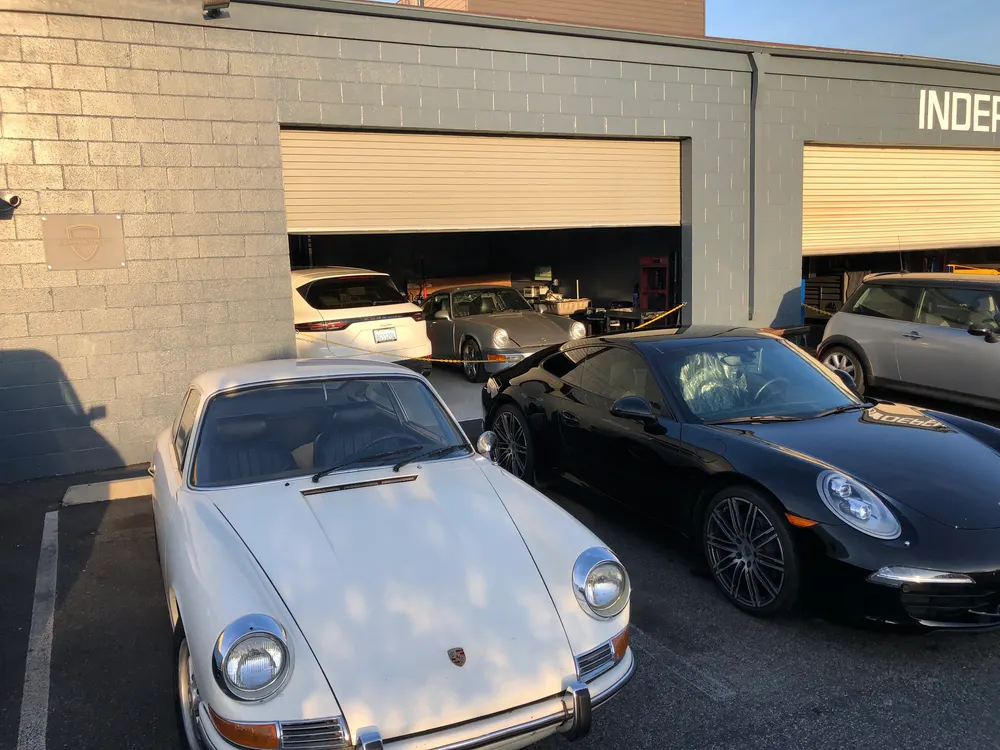
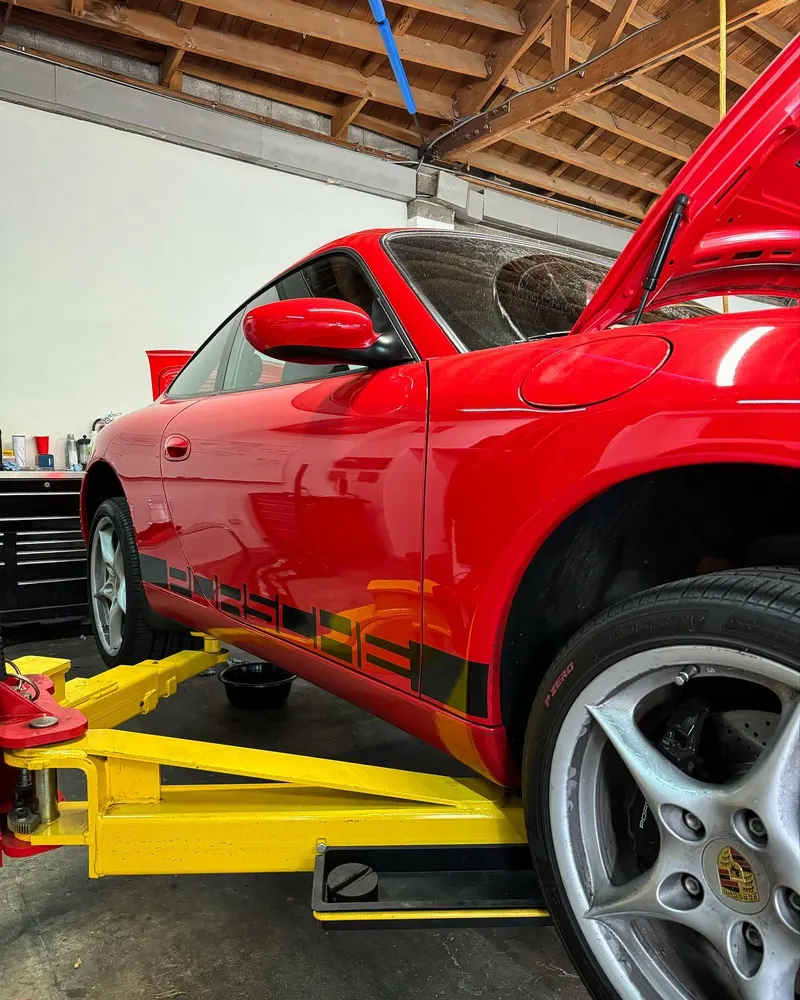
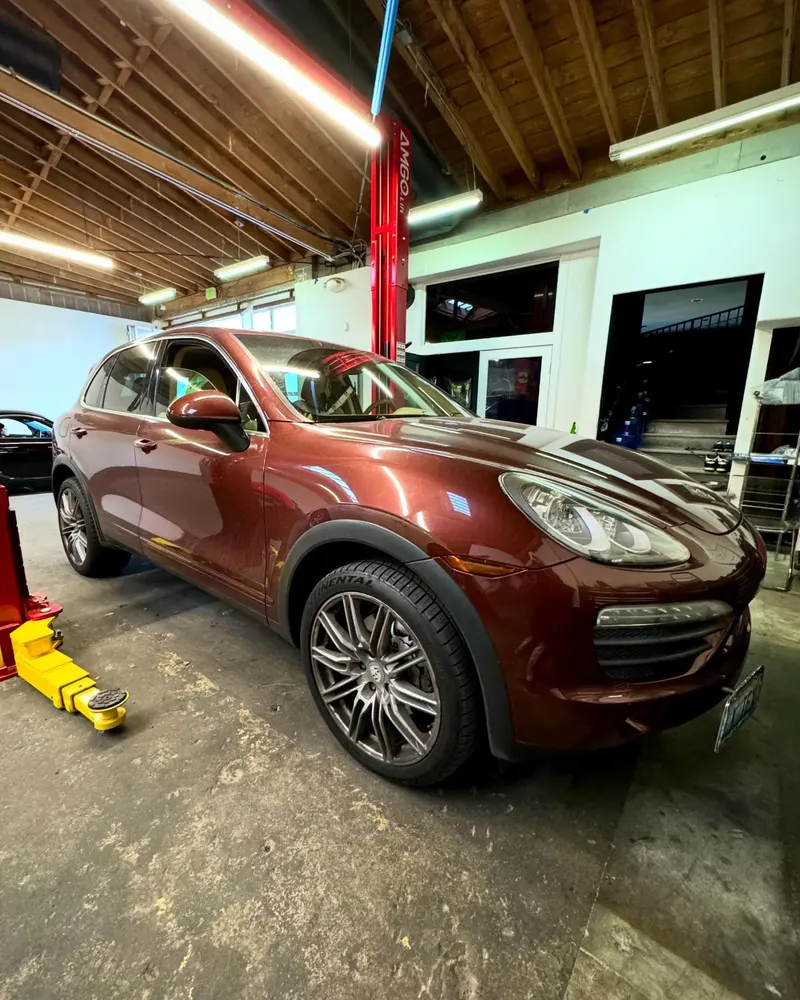
Porsche is the only make we work on, and we've been doing it for more than 30 years. The Werkstatt is independent, with a single shop at 10527 Santa Monica Blvd in West Los Angeles, and works on every model line, from the 911 and Boxster to the Cayenne and Panamera.
Here's how it works: bring the Panamera in, we evaluate it, and we give you a quote.
Book a Panamera mechanic in West Los Angeles
For a Panamera mechanic near you in Los Angeles, request a quote or call (310) 310-3959, and we'll reach out as soon as possible. It helps to know the model year, the version (base, 4, S, 4S, GTS, Turbo or hybrid), the mileage and whether it has air suspension. Bring the car to Santa Monica Boulevard in West LA, just south of Westwood, and we'll evaluate it and give you a quote. If the car sags, a photo taken before you start it in the morning shows which corner drops.