What is a Porsche brake fluid change?
A Porsche brake fluid change replaces the old fluid in your brake system with fresh fluid, from the reservoir under the hood all the way out to each brake caliper. It's one of the simplest items in Porsche maintenance, and one of the easiest to forget, because nothing about the way the car drives tells you it's due.
Porsche sets the interval at every two years on every model, no matter how many miles you drive. That makes it the one line in the Porsche maintenance schedule that's the same for a 911, a Macan or a Cayenne. On manual cars the clutch runs on the same fluid, so the clutch circuit is part of the same change.
A fluid change won't fix a brake fault, though. If your pedal already feels soft, or your brakes squeal or grind, that's a Porsche brake repair, and the car needs an evaluation rather than just new fluid.
Why does brake fluid have a two-year limit?
Brake fluid slowly absorbs moisture from the air, through the rubber hoses, the seals and the reservoir vent. It happens whether you drive every day or leave the car in the garage for months, which is why Porsche uses a date instead of a mileage.
That moisture lowers the temperature at which the fluid boils. Fresh fluid can take well over 400°F; after a few years of soaking up water, it can lose more than a hundred degrees of that. You won't notice around town. You notice on a long downhill, when the fluid near the brakes gets hot enough to form vapor and the pedal suddenly goes soft.
Old fluid also loses the additives that protect the inside of the system. Over time, moisture can pit the calipers and damage the ABS unit, one of the most expensive brake parts on the car. A fluid change every two years costs a fraction of either repair.
How Los Angeles driving affects your brake fluid
Westside driving asks a lot of the brakes in short bursts. Creeping down the Sepulveda Pass in traffic, dropping out of the canyons on Mulholland or Topanga, or braking all the way down Sunset to PCH heats the brakes again and again with little time to cool. That's exactly when tired fluid shows itself, usually as a pedal that sinks further at the bottom of the hill than it did at the top.
Near the coast, the marine layer adds to it. Cars parked in Santa Monica, Venice or Marina del Rey spend much of the year in damp air, and garaged cars in Beverly Hills or Bel Air that barely move still age on the calendar. Either way, the two-year date matters more than the odometer.
Signs your Porsche is due for a brake fluid change
It's been two years
That's the limit on every Porsche, even one that's covered very few miles since the last change.
There's no date on record
If no invoice or sticker shows when it was done, treat it as overdue. The fluid itself won't tell you.
You just bought the car
Sellers skip brake fluid because nothing shows. Start your ownership with a known date.
A canyon drive or track day is coming
Long, hard braking is where old fluid shows itself. Change it before the trip, not after.
The car has been in storage
Fluid keeps absorbing moisture while the car sits, so storage time counts toward the two years.
Brake or clutch parts were replaced
The system gets bled after a caliper, hose or clutch part is replaced, so it makes sense to renew all the fluid then.
What a Porsche brake fluid change involves
New fluid is pushed through the whole system, one caliper at a time, until only clean fluid comes out. Many Porsche calipers have two bleed points, one on each side, and both need opening. The job generally involves:
- Old fluid removed from the reservoir before bleeding
- New brake fluid to the specification for your model
- Every caliper bled, at both bleed points where fitted
- The clutch circuit bled on manual cars
- Hoses, fittings and bleed points checked for leaks afterwards
- The fluid level set in the reservoir
Brake fluid service on every Porsche model
The interval is the same across the range, but the job isn’t identical on every car. Here’s how it differs on each:
911
Four large calipers, most with bleed points on both sides, and a clutch circuit to bleed on manual cars.
Boxster and Cayman
Same routine as the 911. Mid-engine cars often sit garaged for long spells, so the date matters most here.
Macan
A daily driver for many owners. Big brakes on a heavy car work hard in stop-and-go traffic on the 405.
Cayenne
The heaviest Porsche puts the most heat into its brakes, especially towing or coming down canyon roads.
Panamera
A large, heavy car with big calipers, often driven long distances. The two-year change is a good moment to check pad and disc wear too.
Brake fluid change, flush or top-off: what's the difference?
A brake fluid change and a brake fluid flush are the same job when they're done properly: new fluid pushed through every line and caliper until the old fluid is gone.
A top-off is not. Brake fluid barely moves inside the system, so the oldest, wettest fluid stays down at the calipers while the reservoir holds the freshest. Emptying and refilling the reservoir, which some quick-service shops sell as a flush, only replaces the fluid that needed it least, and a test strip dipped in the reservoir only measures the cleanest fluid in the car. That's why the date is the better guide.
When you don't need one
If your records show the fluid was changed less than two years ago, you can leave it, unless the car goes on track. And a street Porsche doesn't need racing fluid. Many race fluids have to be changed far more often. The fluid Porsche specifies, changed on time, is the right choice for the road.
Why Westside Porsche owners choose The Werkstatt
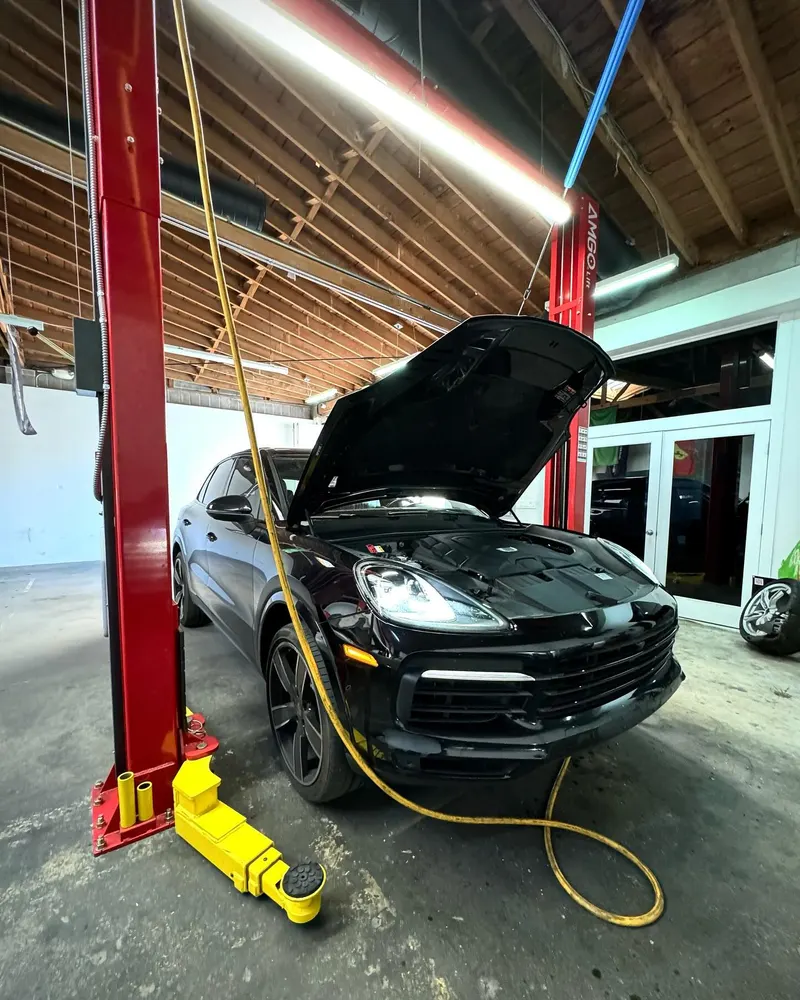
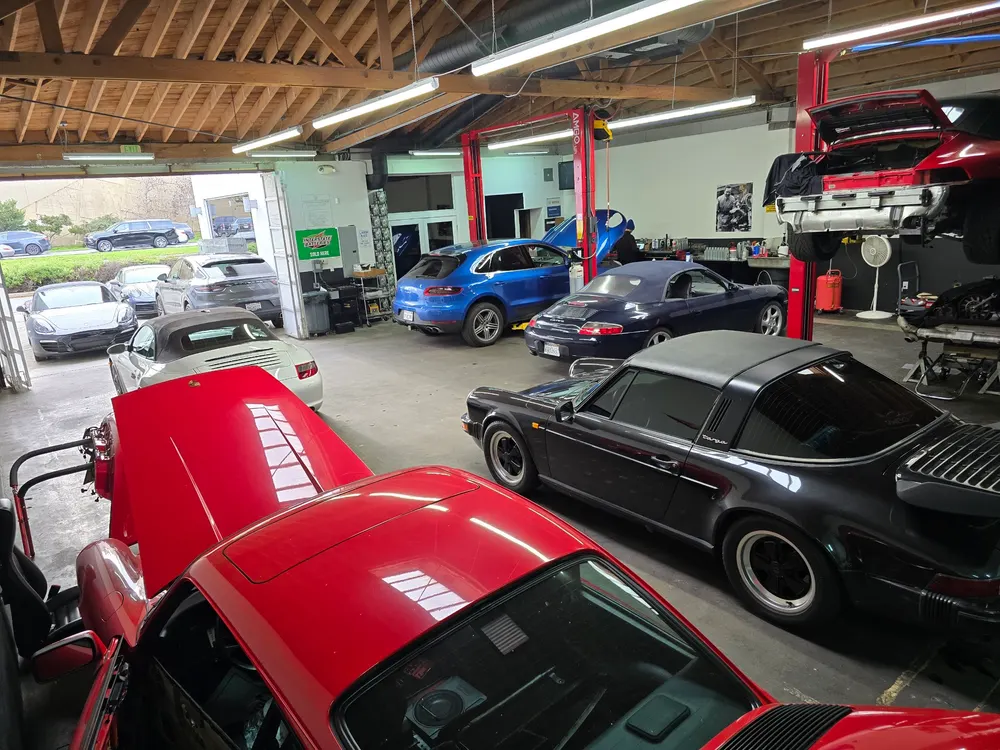
The Werkstatt is an independent shop that has worked only on Porsche for more than 30 years. There's one location, at 10527 Santa Monica Blvd in West Los Angeles, and the work covers every model line, from the 911 and Boxster to the Cayenne and Panamera.
Getting started is straightforward. Bring the car in, we'll evaluate it and give you a quote. If you'd rather start online, request a quote and we'll reach out as soon as possible.
Book a Porsche brake fluid change in West Los Angeles
Have your model and year handy, whether it's a manual or PDK, and when the fluid was last changed. For a Porsche brake fluid change near you in Los Angeles, call (310) 310-3959 or request a quote, and we'll get back to you as soon as possible. Bring the car to Santa Monica Boulevard in West LA, just south of Westwood, and we'll evaluate it and give you a quote. The two-year date often lines up with your minor service, so doing both together saves you a trip.