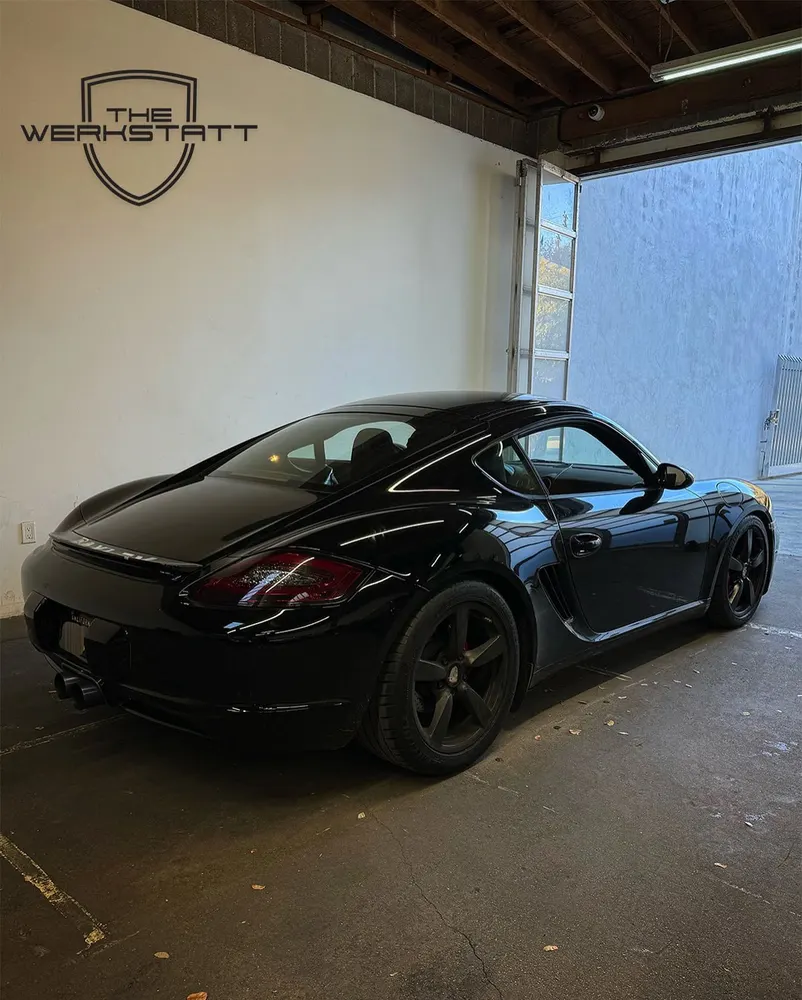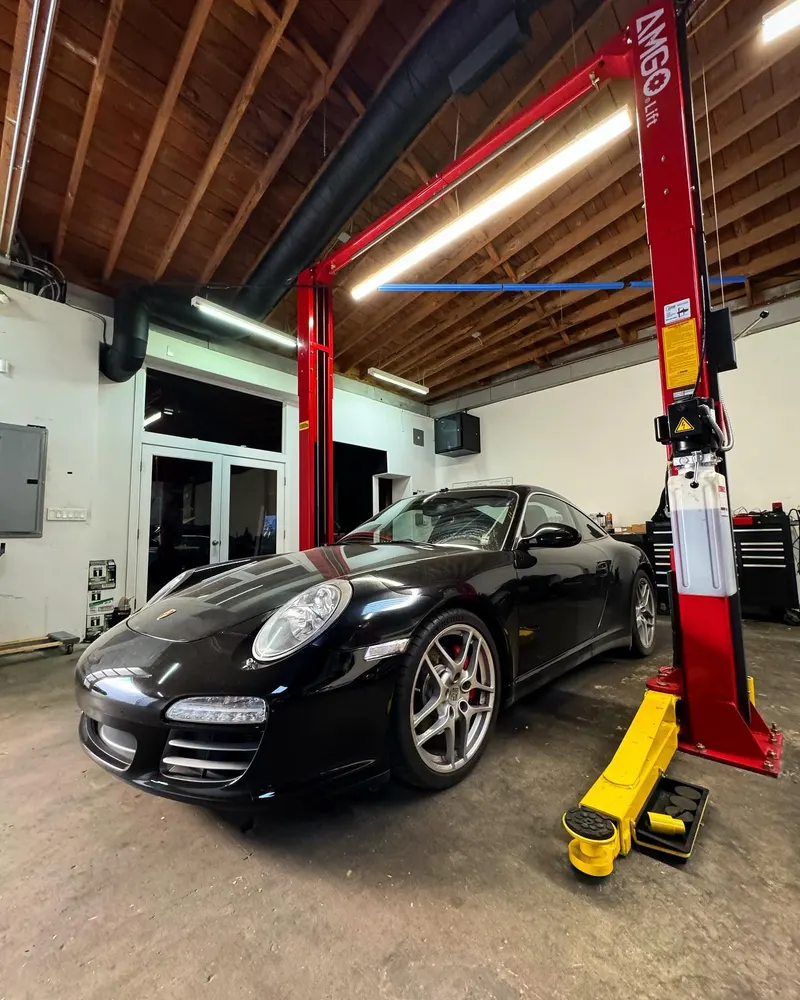
What is Porsche cooling system repair?
Porsche cooling system repair means finding out why coolant is disappearing or the engine is running hot, and fixing that cause. The usual suspects are a cracked pipe or hose, a worn water pump, a clogged radiator, a stuck thermostat, a split expansion tank or a cap that no longer holds pressure. Getting that cause right is the first step of any Porsche repair.
Coolant doesn't get used up. It circulates in a sealed loop, so a level that keeps dropping means it's escaping somewhere: onto the ground, into the air as steam, or occasionally into the engine itself. Which one it is matters, because a loose clamp and a failed water pump can leave the same puddle on your garage floor.
If the engine has already run hot and is now smoking, knocking or down on power, the conversation moves to Porsche engine repair. Stopping early is what keeps that list short.
Why do Porsche cooling systems leak?
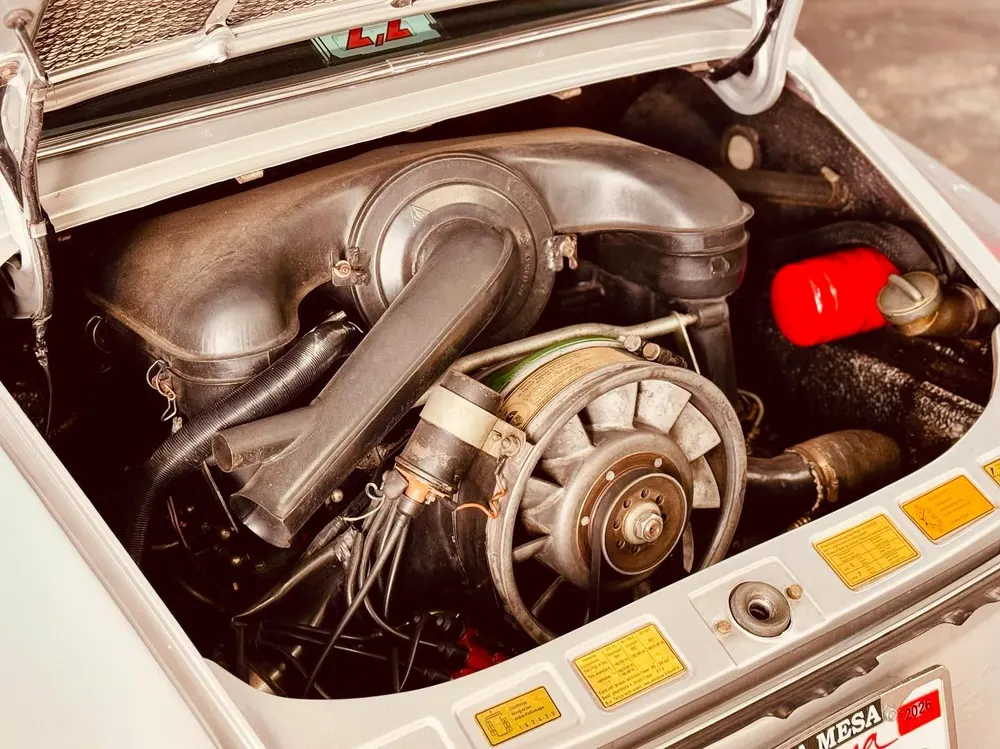
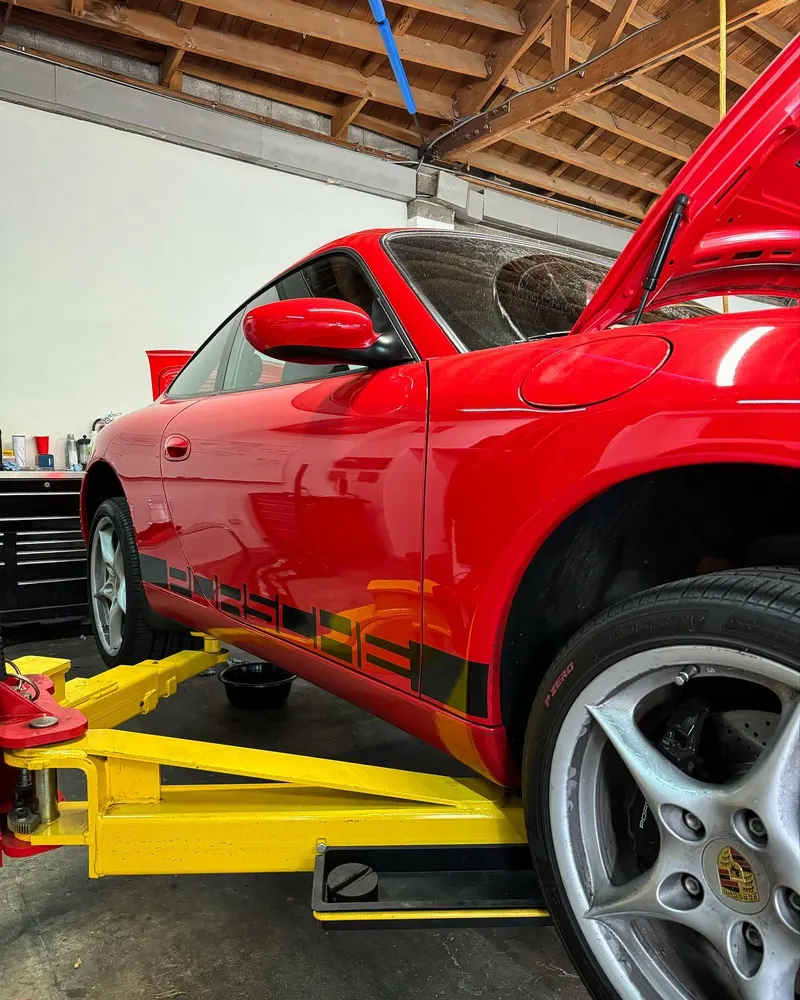
On a 911, Boxster or Cayman the engine sits behind you, but the radiators are up front, behind the bumper openings. Coolant travels the length of the car and back through long pipes. More pipe means more joints, and every joint is one more place a leak can start.
Most leaks begin at plastic parts and glued joints, not metal. Every drive heats the coolant to around 200°F and lets it cool again. Over the years that cycle makes plastic brittle and weakens adhesive, until a part cracks or lets go. Which part fails first depends on the model and engine.
The long loop also traps air. After a repair, an air pocket can stop coolant flowing through part of the engine, and the gauge climbs even though the tank looks full. That's why a cooling repair isn't finished until the air is bled out of the system, not after a quick top-up.
How Los Angeles driving affects your cooling system
The hardest test for a cooling system on the Westside is standing still. In traffic on the 405 or the 10, no air rushes through the radiators, so the fans do all the work. Add a July afternoon crossing the Sepulveda Pass into the Valley, where it's often much hotter than at the coast, and a weak fan or a half-blocked radiator shows up fast.
The front radiators also collect whatever the road throws at them. Leaves from the tree-lined streets of Brentwood and Beverly Hills, sand near the beach and grit from canyon roads like Topanga pack into the space in front of them. That debris holds moisture, blocks airflow and slowly corrodes the metal from behind, where you can't see it.
Signs your Porsche needs cooling system repair
A low coolant warning
The tank is low. If you've topped it up more than once, something is leaking.
Pink or green puddles under the car
Note where it drips. The front corners point to radiators, the middle or rear to pipes or the pump.
The temperature gauge climbing
Pull over and switch off. Driving on with a hot engine turns a leak into engine damage.
A sweet smell or steam after a drive
Coolant landing on hot metal evaporates, so you can smell a leak you can't see.
A grinding or chirping from the belt area
Often a water pump bearing on its way out. A seized pump can take the drive belt with it.
A slow warm-up and a weak heater
Usually a thermostat stuck open, which can also turn on the check engine light.
What a Porsche cooling system repair usually covers
A cooling repair generally means finding where the coolant is going and replacing the part that's letting it out. Depending on the car, it can involve:
- Pressure-testing the cooling system cold to find the leak
- Expansion tank and pressure cap
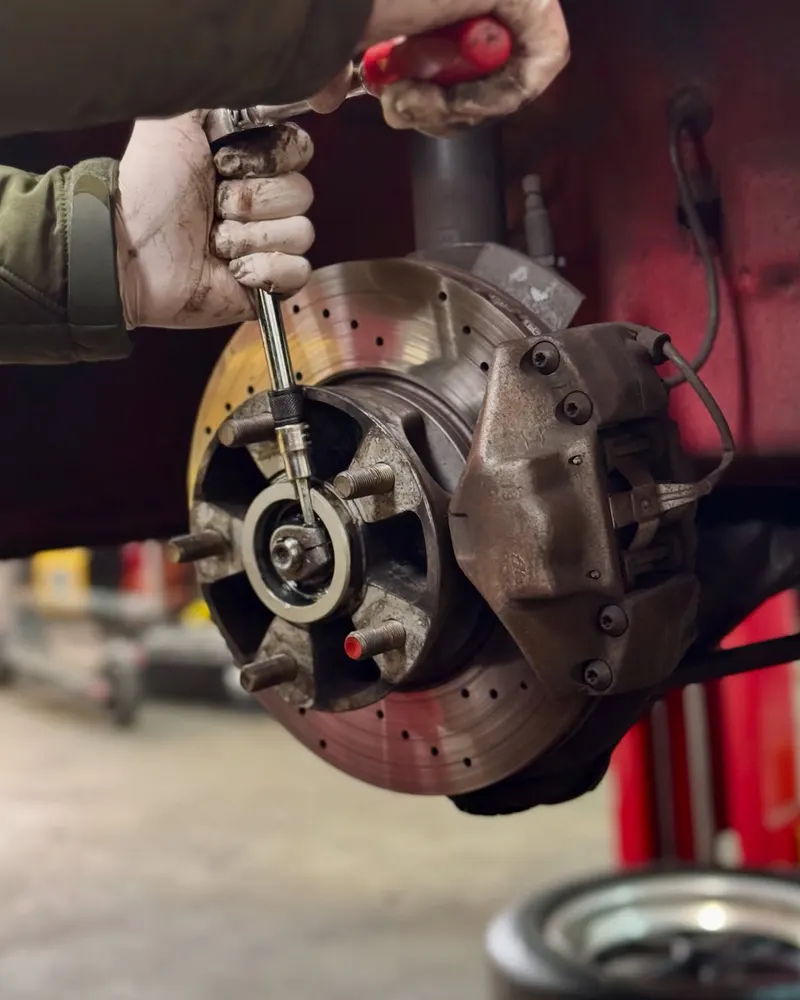
- Water pump seepage and bearing play
- Radiators and front ducts with debris, corrosion or stone damage
- Hoses, pipes and the known weak joints for your model
- Radiator fans and thermostats
- Refilling with the correct coolant and bleeding out the air
Cooling system repair on every Porsche model
Every Porsche cools its engine the same basic way, but each model has its own weak spots:
911
Long pipes run from the rear engine to the front radiators. On 996 and early 997 Turbos, glued coolant fittings can push out.
Boxster and Cayman
The same front-radiator layout with the engine in the middle. Water pumps and expansion tanks wear with age.
Macan
The engine is up front, so the coolant path is shorter. Hoses, the pump and the radiators still age like any others.
Cayenne
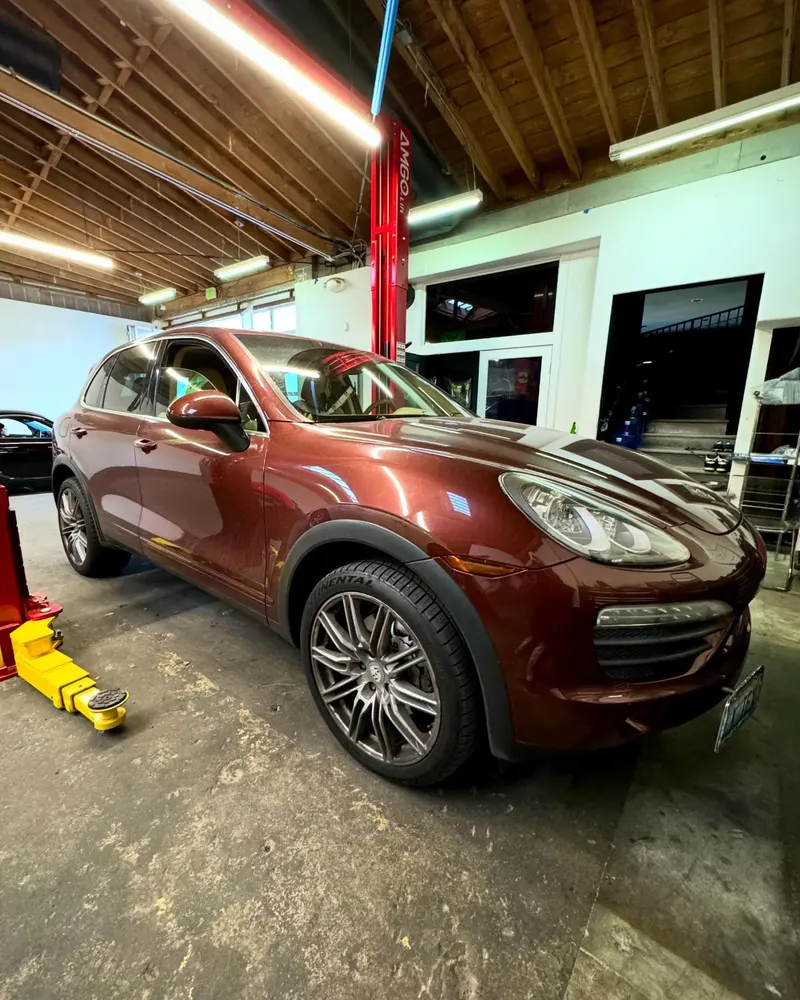
First-generation V8s used plastic coolant pipes under the intake, a known failure that any Porsche Cayenne specialist checks first.
Panamera
A big front-engined car with a large cooling system. Pumps, thermostats and hoses age with time, whatever the mileage.
Radiator, water pump or just the cap: repair or replace?
Not every drop in coolant needs a big repair. A tired pressure cap that lets coolant escape when it's hot is a small, inexpensive part. So is a single hardened hose. Radiators that look bad from the front are often just packed with debris, and cleaning out the ducts costs far less than new radiators.
Other jobs are worth combining. If the water pump is being replaced, the thermostat and nearby hoses share much of the same labor. And if a big job means taking the engine out, such as fixing the coolant fittings on a Turbo, that's the time to handle any other work that needs the engine out too.
When you don't need cooling system repair
If the coolant level dropped a little once and then held steady for weeks, you may not have a leak worth chasing. A small change after a service, as trapped air works its way out, is normal. Note the level on the tank and keep an eye on it. If it keeps falling, have it looked at. If it doesn't, keep your money.
Why Westside Porsche owners choose The Werkstatt
A Porsche coolant leak is usually at a spot that's known for that model, and that knowledge comes from experience. We've worked on nothing but Porsches for more than 30 years, as an independent shop at 10527 Santa Monica Blvd in West Los Angeles, on every model line from the 911 and Boxster to the Cayenne and Panamera.
Bring the car in, and we'll evaluate it and give you a quote.
Book Porsche cooling system repair in West Los Angeles
If the gauge is climbing, call (310) 310-3959 before you drive anywhere. Otherwise, have your model, year and engine ready, along with where the coolant shows up under the car and whether the temperature has moved. For Porsche cooling system repair near you in Los Angeles, request a quote and we'll reach out as soon as possible. Bring the car to Santa Monica Boulevard in West LA, about a mile east of the 405, and we'll evaluate it and give you a quote. Photograph the puddle before you move the car, because where it sits says a lot about the source.